

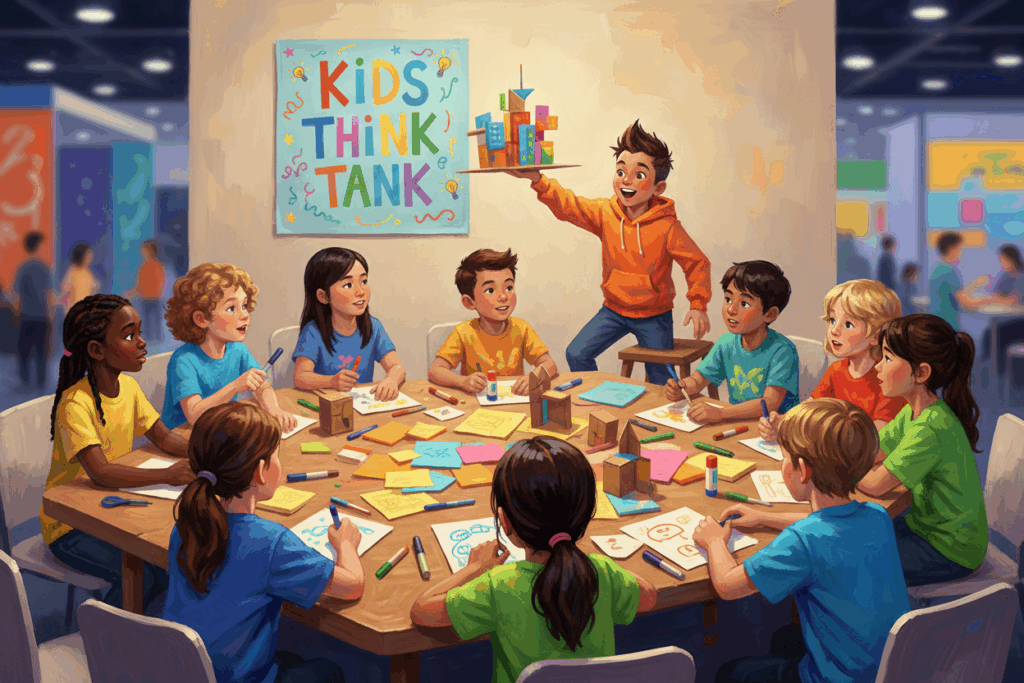
Kids Think Tanks are dedicated creativity and strategy sessions where children act as innovators and advisors. In a structured, playful environment, they brainstorm, analyze, and propose creative solutions to real-world challenges related to their lives, communities, and the wider world.
Why Kids Think Tanks?
- Developing children’s skills
Kids Think Tanks are powerful for developing creativity, critical thinking, leadership, collaboration, communication, and problem-solving. Children learn to listen, negotiate, present, and refine ideas in a safe, supportive environment. - Solving real problems in communities, schools, cities, and society
Children experience the world differently from adults and are naturally more imaginative and open-minded. Their perspectives can reveal unmet needs and fresh solutions to issues related to play, learning, safety, access, inclusion, and wellbeing. - Generating ideas that become real projects
The ideas developed in Kids Think Tanks do not stay on paper. They can be transformed into real projects in business, art, education, design, events, and many other fields—feeding into Kids Business Fairs, Events by Kids, community initiatives, and organizational innovation pipelines.
Typical Structure
- Welcome & Warm-up
Icebreakers and creative prompts to help children feel comfortable and ready to think differently. - Mission Briefing
A clear, simple explanation of the challenge (for example: “How can we make this museum more fun for kids?” or “How can we make weekends more meaningful for families in our city?”). - Inspiration & Context
Short stories, pictures, videos, or a quick talk from an expert (such as a city planner, event organizer, or teacher) to help kids understand the context and think with empathy. We also use specially developed visual tools for idea generation and project development. - Idea Generation (Individual + Group)
Children first create their own ideas through drawing or writing, then work in small groups to share, combine, and build on each other’s concepts. - Solution Development
Groups select their favorite ideas and develop them further: naming the idea, drawing it, explaining how it works, who it helps, and what is needed to make it real. - Presentations
Each group presents its ideas to peers and adults. Time is dedicated to positive feedback, questions, and potential next steps. - Recognition & Follow-up
Ideas are captured, displayed, and (where possible) shared with decision-makers. Children receive recognition as contributors and junior innovators.
Advantages of the Kids Think Tanks Format
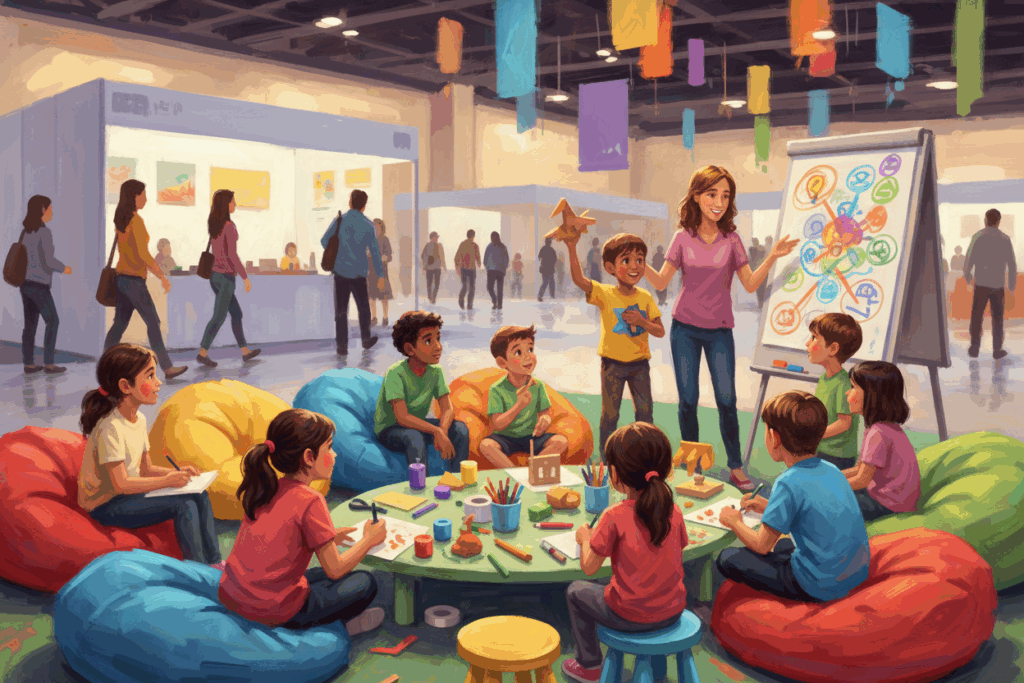
Kids Think Tanks can be integrated into almost any event or program—business expos, boat shows, trade fairs, educational programs, tourism events, community festivals, corporate conferences, and more. This format offers multiple benefits.
- Involve more families with children
A meaningful, structured kids’ component makes events more attractive to families, who see clear value for both adults and children. - Organize children’s time while adults are busy
While adults attend sessions, meetings, or exhibitions, children are meaningfully engaged in supervised, educational, and creative activities—instead of simply waiting or using screens. - Provide additional incentives for families to come
Events that offer Kids Think Tanks stand out. Parents have a stronger reason to choose these events because their children gain something developmental and enjoyable. - Develop new ideas and solutions
Children’s fresh perspectives often lead to original concepts that can inspire new products, services, spaces, events, and policies—especially those related to children and families. - Demonstrate responsibility and care for the future
Including Kids Think Tanks shows that organizers and partners care about future generations, long-term impact, and sustainability—not just short-term outcomes. It visibly signals a commitment to listening to children’s voices. - Create additional media and storytelling opportunities
The format naturally generates compelling stories, visuals, and narratives that attract media attention and enrich communication campaigns, reports, and social media content. - Make events and projects more fulfilling, diverse, and impactful
Integrating children’s ideas and presence adds depth, diversity, and a sense of purpose. It transforms events and initiatives into richer, more human experiences that participants remember and value.
Kids Think Tanks are not just a “kids’ corner.” They are a strategic, child-centered innovation format that develops children, strengthens families, and helps organizations and communities design a more thoughtful, creative, and kid-friendly future.